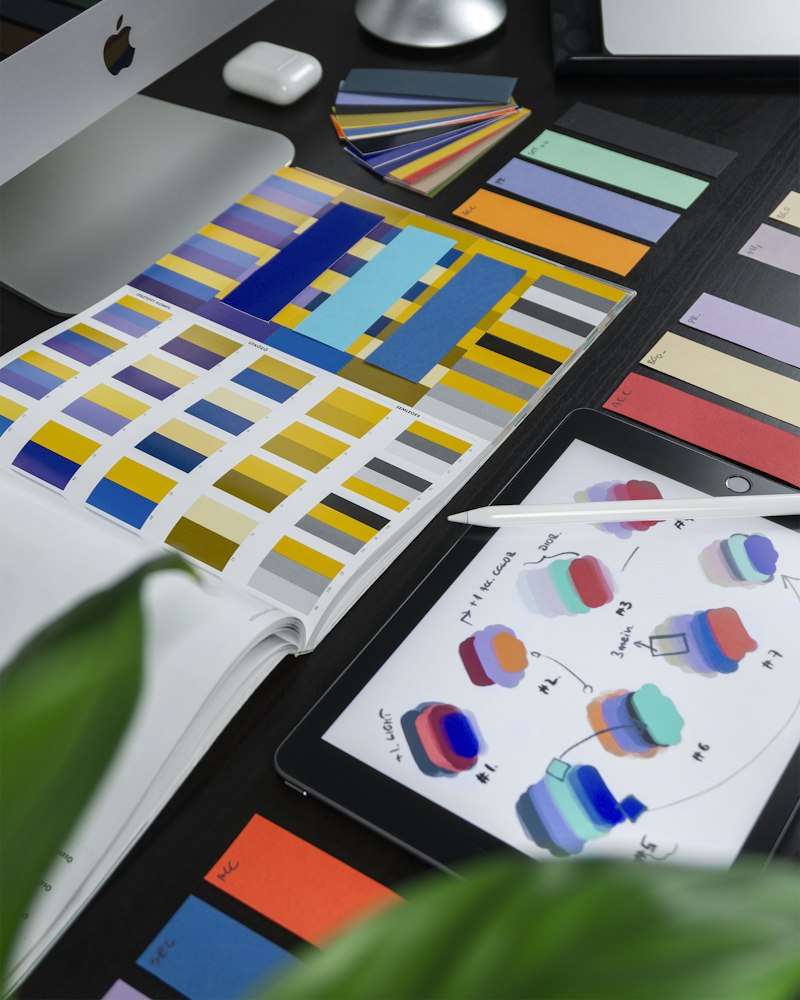
In a world where users judge a website or app within 50 milliseconds, professional UI/UX design isn't a luxury — it's a business necessity that directly impacts your bottom line.
The Business Case for Design: Every $1 invested in UX design returns $100. Companies that prioritize design outperform the S&P 500 by 228%. These aren't just statistics — they reflect the reality that intuitive, enjoyable digital experiences convert visitors into customers.
UI vs UX — Understanding the Difference: UI (User Interface) design focuses on visual elements — colors, typography, buttons, layouts, and icons. UX (User Experience) design focuses on the overall journey — how users navigate, complete tasks, and feel while interacting with your product. Both are essential and work together.
The Design Process: Professional UI/UX design follows a structured process — User Research (understanding your audience through interviews, surveys, and analytics), Information Architecture (organizing content and navigation logically), Wireframing (low-fidelity layouts to validate structure), Visual Design (high-fidelity designs with brand identity), Prototyping (interactive mockups for testing), and Usability Testing (validating designs with real users).
Mobile-First Design: With over 60% of web traffic on mobile, designing for mobile first ensures your product works on the most constrained screen size. Mobile-first designs naturally prioritize content and functionality, resulting in cleaner desktop experiences as well.
Conversion Rate Optimization Through Design: Strategic design choices directly impact conversions. Clear CTAs with contrasting colors increase clicks by 35%. Reducing form fields from 11 to 4 increases conversions by 120%. White space improves comprehension by 20%. Every design decision should be informed by user behavior data.
Design Systems for Consistency: A design system — a collection of reusable components, design tokens, and guidelines — ensures consistency across your product. This reduces development time, maintains brand coherence, and improves user experience as your product grows.
Accessibility as Design Quality: Inclusive design that accommodates users with different abilities isn't just ethical — it expands your market reach. Accessible designs often improve usability for all users through clearer navigation, better contrast, and more intuitive interactions.
Common Design Mistakes: Cluttered layouts with too many elements competing for attention, inconsistent navigation patterns, poor typography choices, ignoring mobile users, skipping user testing, and designing based on personal preference rather than user needs.
Site Craft Innovation's UI/UX design services combine aesthetic excellence with data-driven decision making. We create designs that users love and that drive measurable business results.